noviembre 19, 2014

iOS is twice as memory-efficient as Android. Here’s why.
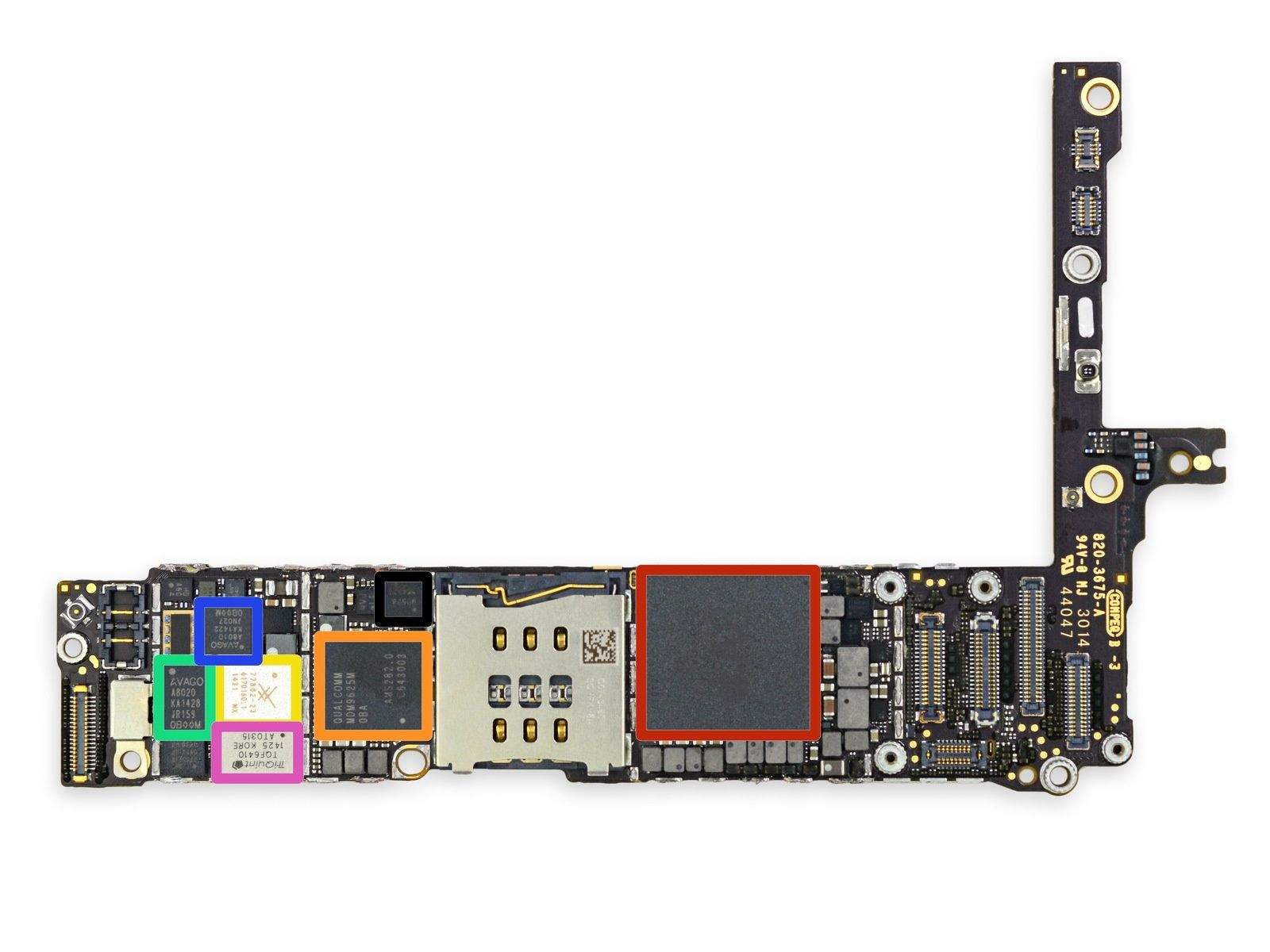
Here's why the iPhone 6 can do with less RAM (outlined in red) than Android phones. Photo: iFixIt
Here’s why the iPhone 6 can do with less RAM (outlined in red) than Android phones. Photo: iFixIt
When the iPhone 6 and iPhone 6 Plus were announced, many Android fans laughed at the “pitiful” 1GB of RAM of Apple’s flagship smartphone, when Android flagships tended to ship with 2GB and sometimes more.
But specs don’t always — or even most of the time — tell the whole story. As it turns out, an iPhone 6 with 1GB of RAM runs much faster than a similarly specced Android smartphone with 2GB of RAM. And it all has to do with the fundamental difference in the way iOS and Android handle apps.
According to Glyn Williams over on Quora, iOS devices run better than Android devices with twice the RAM because Android apps use Java, and need all the extra RAM to do something called garbage collection.
What’s garbage collection? It’s a process that triggers the recycling of memory once an Android app is done using it. Usually, this works pretty well on systems that have a lot of free RAM, but once you get a lot of different apps running, things start getting dicey.
According to Williams, Android’s garbage collectors work best when Android apps have 4 to 8 times as much memory as is actually needed in order to perform the garbage collection process. Once you stop having that amount of free memory available, performance starts suffering.
This is why Android devices need to have twice as much RAM to run apps as your iPhone does. And as we’ve previously seen, more RAM negatively affects battery life too, which is part of why Android phones need to have larger batteries to attain the same battery life as an iPhone 6 too.
As for iOS? The operating system doesn’t need all the extra memory associated with Java and Android, since it was designed to avoid this sort of garbage collection from scratch. It only needs the memory it’s using. What a radical idea, huh?

Read more at http://www.cultofmac.com/303223/ios-twice-memory-efficient-android-heres/#YIW8LDOBWdc2ScFY.99
noviembre 18, 2014

6 links that will show you what Google knows about you


Want to find out all the things Google knows about you? Here are 6 links that will show you some of the data Google has about you.

1. Find out how Google sees you

Google attempts to create a basic profile of you, your age, gender, interests. They use this data to serve you relevant ads. You can review how Google sees you here:

2. Find out your location history

If you use Android, your mobile device may be sending your location as well as velocity data to Google. You can see your entire location history and export it here:

3. Find out your entire Google Search history

Google saves every single search you have ever done. On top of that, they record every Google ad you have clicked on. This log is available to you here:

4. Find out every device that has accessed your Google account

If you worry that someone else might be using your account, you can find a list of all devices that have accessed your Google account, their IP address and approximate location here:

5. Find out all the apps and extensions that are accessing your Google data

This is a list of all the apps that have any type of access to your data. You can see the exact type of permissions granted to the app and revoke access to your data here:

6. Export all of your data out of Google

Google let’s you export all your data: bookmarks, emails, contacts, drive files, profile info, your youtube videos, photos and more here:

Originally published at blog.cloudfender.com.

noviembre 14, 2014

Amazon’s Weird Siri-Like Speaker Is Yet Another Way to Get You to Shop


Amazon has about $83 million in unsold Fire phones laying around inside its warehouses, but apparently, it hasn’t run out of shelf space just yet. On Thursday, the online retailer took another strange turn in the world of hardware by unveiling a wireless speaker with a Siri-like ability to recognize speech and answer questions.
Called the Amazon Echo, the device is ostensibly about playing music and providing information. But ultimately, it looks like yet another gadget Amazon hopes to use as a way of driving retail purchases. It’s also Amazon’s most visible contribution yet to an accelerating push among tech giants towards an internet that’s controlled by voice.
The Echo is a small cylinder that sits on a table and has an array of seven microphones on the top that Amazon says can pick up speech even when music is playing. It can stream music from Amazon directly, or connect by Bluetooth to phones and tablets. Instead of “Siri” or “Okay, Google,” the “wake word” for the always-on device is “Alexa.” (Why Amazon chose that word is unclear.)*
FOR AMAZON, THE SOUND OF YOU MAKING YOUR SHOPPING LIST HAS THE RING OF MONEY IN THE BANK.
Once the Echo is awake, Amazon says, it can answer questions and supply information on the weather, news, and anything you might look up on Wikipedia. You can also use your voice to set alarms and control music playback. But though the company doesn’t play it up, the most significant feature for Amazon is shopping lists.
By allowing users to make shopping lists by voice alone, Amazon is moving closer to a time when “one-click” shopping becomes “no-click” shopping. Already Amazon offers some users of its Prime Fresh grocery deliver service a device, called the Dash, that includes a barcode scanner and a microphone for adding items to your order queue.
While the Dash was free, the Echo costs $199—or, tellingly, just $99 for Prime members, who already buy a lot more stuff from Amazon. (Either way, the device for now is only available by invitation.) Neither the Dash nor the Echo will actually place orders yet, but it’s not hard to see that day coming.
In a report earlier this year, Forrester Research predicted a near-future when voice would become the primary way of interacting with computers, especially in the home. The home of the future, Forrester’s James McQuivey wrote, will teem with tiny connected microphones tied to the cloud. And the company perhaps in the best position to perfect this “voice layer,” he said, is Amazon, since it has the most obvious financial motivation—the better Amazon gets at listening, the easier it makes buying.
Unlike the Dash, which you need to speak into directly, the Echo is designed to hear voices from anywhere in a room. And for Amazon, the sound of you making your shopping list has the ring of money in the bank.
*Update (November 6, 2014, 5pm PT): Alexa Internet is the name of the web traffic data company bought by Amazon back in 1999. Among its operations, Alexa donates data from its web crawls to the Internet Archive, whose stated mission is “universal access to all knowledge.” (h/t @WIZARDISHUNGRY)


Update (November 6, 2014, 5:25pm PT): Forrester’s James McQuivey offered some thoughts on the Echo:
Every major digital platform company from Google to Apple wants to put sensors in your home. Google has thermostats and cameras thanks to its acquisition of Nest and Dropcam, Apple has added HomeKit, a set of developer tools for building apps for the home. But Amazon is the first to put a persistent microphone interface in your home, a listening and learning service that is ready to hear your every command. Sure, it doubles as a connected speaker and some people will end up buying it for that, but the Echo will only achieve its real purpose when you start asking it questions, having it complete tasks for you — especially shopping tasks — just the way Apple hopes its users will interact with Apple Watch.

Microsoft's latest Mac vs. PC ad recruits Lenovo to fight the MacBook Air   

A laptop dance-off

By Tom Warren @tomwarren   on 


Microsoft reignited the classic Mac vs. PC war back in August by targeting the MacBook Air in its new Surface Pro 3 ads. That attack is continuing today thanks to a new ad that features Lenovo’s new Yoga 3 Pro. Microsoft places Apple’s 13-inch MacBook Air head-to-head with Lenovo’s Yoga 3 Pro, initially highlighting the 17mm "thickness" of the MacBook Air vs. the 13mm "thinness" of the Yoga 3 Pro. Most of the ad then focuses on the flexibility of the tablet, touchscreen, and tent modes of Lenovo’s latest convertible, with Apple’s laptop failing to "dance" in amusing comparisons. The dance-off ends with the MacBook Air admitting it’s "game over" and closing its lid.
MICROSOFT SWITCHES FROM PICKING ON THE IPAD TO THE MACBOOK AIR
While Microsoft’s latest ad is a lighthearted jab at Apple, it shows the direction the software maker is focusing its latest marketing resources towards. Microsoft originally started picking on the iPad with similar comparisons to Windows 8 tablets last year, but as Apple’s tablet sales slumped Microsoft has turned its attention to the Mac. Apple recently moved into the top five PC makers for the first time thanks to an 8.9 percent increase in Mac sales in the latest quarter. That’s only 5.52 million Mac sales over a period of three months, but the increase defies the broader PC industry that’s contracting.
It’s difficult to say whether these types of ads are working, but Microsoft’s Surface revenue more than doubled in its latest quarter, hinting that the Surface Pro 3 is starting to make a mark alongside its strong marketing against the MacBook Air. Apple’s laptop still has some advantages that Microsoft isn’t highlighting with its latest ads though, namely price and battery life. The comparison site for the Yoga 3 Pro vs. the 13-inch MacBook Air doesn’t compare price, with Apple’s laptop starting at $999 and Lenovo’s at $1299. That $300 price gap is partly because of the high-resolution touchscreen display on the Lenovo, but Apple’s choice to ship an inferior screen on the MacBook Air helps it achieve an impressive 13 hours of battery life running The Verge Battery Test. Lenovo estimates around 7 hours for the Yoga 3 Pro, a compromise for the flexibility and high-resolution touchscreen display.

noviembre 12, 2014

6 Habits That Kill Your Intelligence


Losing Brain
Although you may not believe it, there are certain habits that you have fallen in to, which are hindering your ability to move forward in life. Although you think it has no effect on your life, these bad habits that kill your intelligence not only set you back, they are also going to stop you from being able to accomplish certain things, or attain the goals that you have set for yourself. These are some habits that are holding you back, and possibly causing you to make poor choices or decisions in your life.
1. Not Creating and evaluating
It is impossible for you to go forward and backward at the same time; it is also impossible for you to go up and down simultaneously, the same goes with your mind. When you are trying to create something, and evaluate the success at the same time, you are never going to get a project going.
You first have to find out what you want to create, how it is going to work, and draw out the plans; you will then create a project or product, and only after it has been created and implemented, can you begin to evaluate how it is performing, in any situation. Give things time, and do not try to do two complete opposite tasks, at the same time.
2. You think you’re are expert 
The expert syndrome is another habit people have, which kills their intelligence. When you believe you are an expert at every and anything, you stop learning. You will never be humble enough to listen to others, and learn from their experience.
This is in fact going to set you back, and is going to hinder your intelligence. Be open to the fact that you do not know everything, and that anyone can help you learn something new. Not only will this allow you to learn new things, it will help you come off as less of an ignorant person with others.
Too much thinking
3. Fear -
If you are always afraid you are going to fail, you are never going to try something new. It is likely you are going to fail, more than once, especially if you have never done something before. But, if you never try, or never attempt to learn something new because you are afraid you are going to fail, you are never going to get better, and are never going to learn new things. So, you have to eliminate the fear, and accept the fact that failure comes with everything new you are going to try.
4. Lack of confidence -
This goes hand in hand with the fear to fail. If you always believe you are going to mess up, and do not have confidence in the things you do, you can never learn and grow. Having confidence in yourself, even if you are doing something wrong, allows you to learn, and grow, and it allows you to move forward. This will help build intelligence, and allow you to learn new things, and experience new things in life.

Mind 5. Creating limits -
Although you may have certain limits (such as financial, or certain capacities), when you create false limits, you are hindering your intelligence and ability to learn. When you put obstacles in the way, that are not really there, you are never going to try things. This will not only kill your intelligence, it will also stop you from trying new things, and learning new things that can make you better, and can possibly make you a more successful person. So, remove irrelevant limits, and those which are only created by you in your mind.
6. Drinking -
Although it is something enjoyable, alcohol does hinder your intelligence and ability to comprehend or grasp subjects. So, drinking every once in a while will not kill all brain cells, but you should know that alcohol (and drugs), will hinder, and kill your brain cells, making it harder to learn new things. So, if you do consume alcohol, it should be done lightly, and it should be done infrequently, so as to ensure you are not going to cause damage to your brain, and possibly cause problems with the future ability to learn new things and expand on knowledge basis.